
Galvanized or painted steel cable trays are the standard, but they deteriorate quickly in humid or corrosive environments. Rust weakens their structure, compromises cable integrity, and necessitates frequent replacements. Their weight and electrical conductivity complicate installation and increase safety risks.
Aluminum, although lighter, remains conductive and is susceptible to galvanic corrosion when in contact with other metals. It deforms under impact and offers limited chemical resistance. Its high thermal conductivity can cause overheating problems in certain configurations.
PVC offers good electrical insulation but lacks mechanical strength for heavy loads, degrades under prolonged UV exposure and has low resistance to high temperatures and chemical solvents.
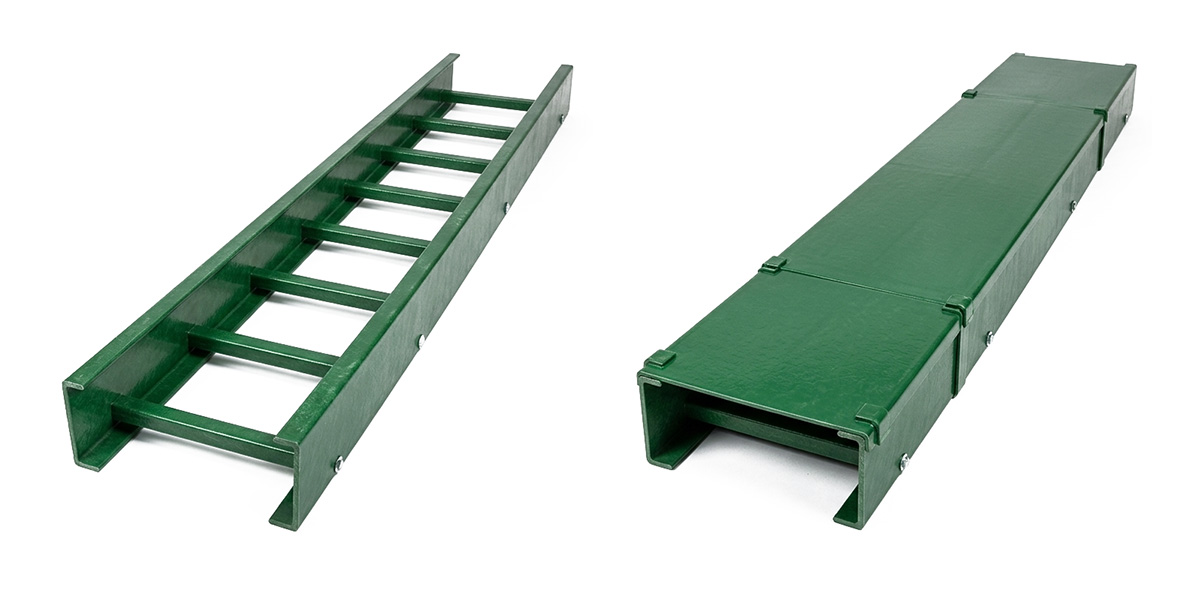
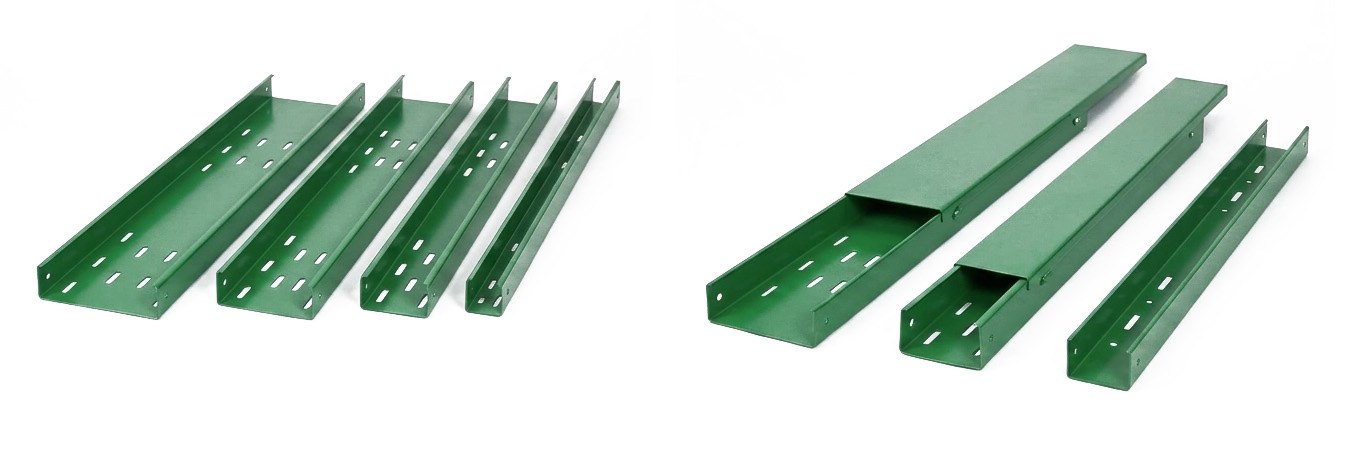
GRP (Glass Reinforced Plastic) cable trays offer a revolutionary solution for cable management and routing in demanding industrial environments. Manufactured by pultrusion or molding, these systems combine continuous glass fibers and thermosetting resins to create lightweight, strong, and completely non-conductive structures.
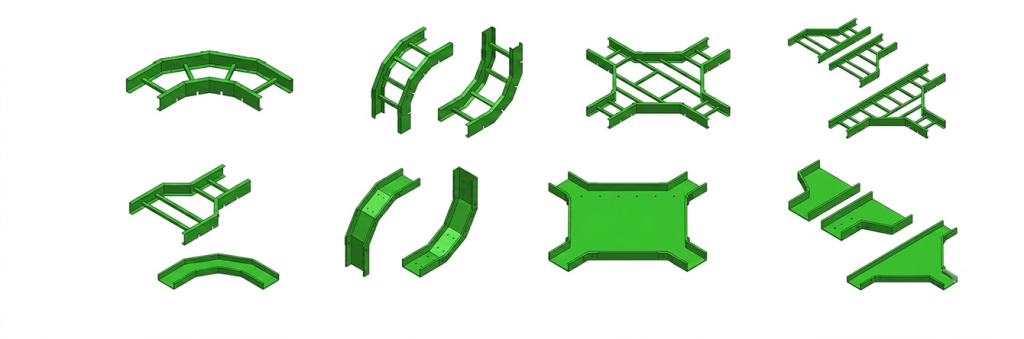
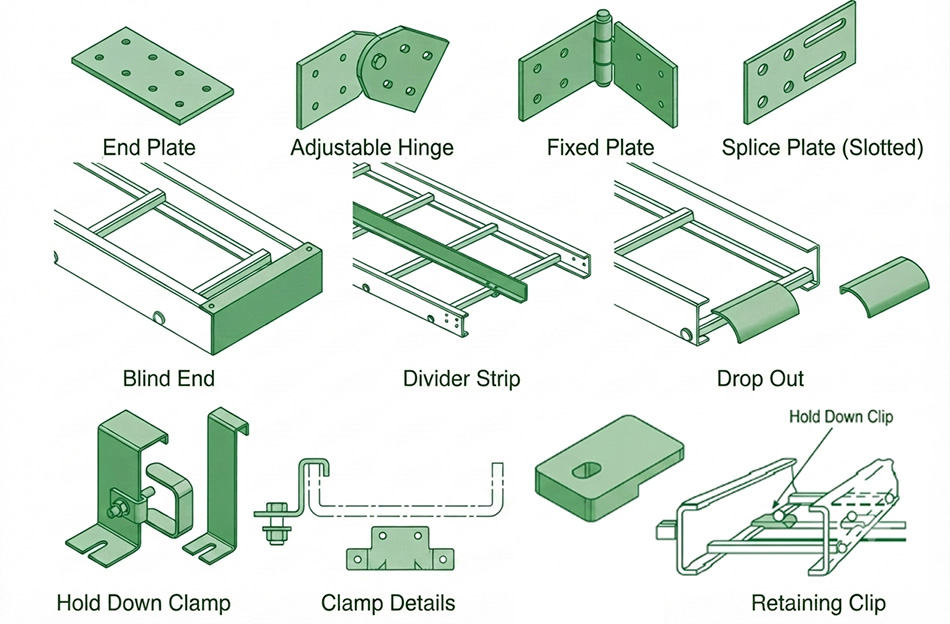
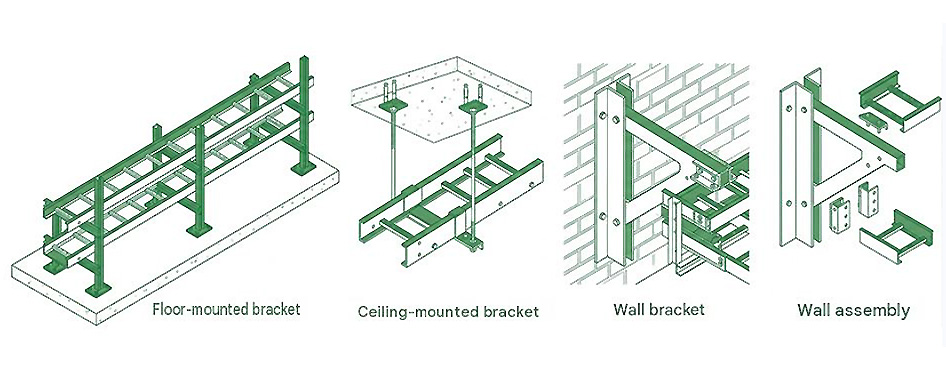
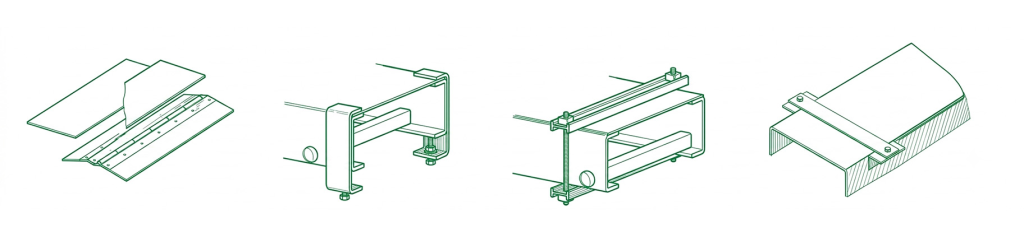
Our range includes: Ladder-type cable trays with or without a cover, Perforated-type cable trays with or without a cover, and a wide range of accessories: coupling plates, splice plates, retaining clips, cable ties, separation strips, splices, and wall/ceiling/floor brackets.
Property | Steel / Aluminum | FRP / GRP | Advantage |
Corrosion | Rapid rust without protection | Total immunity | FRP/GRP |
Weight | Heavy (requires crane) | 1/4 the weight of steel | FRP/GRP |
Electrical conductivity | Conductive (shock risk) | Non-conductive | FRP/GRP |
Maintenance | Regular painting/galvanization | Almost none | FRP/GRP |
Installation | Welding + heavy equipment | Simple bolting | FRP/GRP |
UV resistance | Degradation / rust | Integrated protection | FRP/GRP |
Chemical resistance | Low (corrosion) | Excellent | FRP/GRP |
Life cycle cost | High (frequent replacements) | Reduced | FRP/GRP |
Thermal conductivity | High (heat/cable issues) | Low (insulator) | FRP/GRP |
Property | FRP/GRP Value | Steel Value | Remark |
Density | ~1,800 kg/m³ | 7,850 kg/m³ | 75% lighter |
Tensile strength | 70,000 - 100,000 psi | 58,000 psi (A36) | Superior |
Electrical conductivity | Non-conductive | Conductive | Optimal safety |
Thermal conductivity | Low (insulator) | High | Cable protection |
Chemical resistance | Excellent (acids, alkalis, solvents) | Poor without protection | Total immunity |
UV resistance | Integrated (no degradation) | Degradation / rust | Increased longevity |
Fire resistance | ASTM E84 Class 1 (optional) | Naturally high | Retardants available |
Service life | 50+ years | 15-25 years (corrosive) | Minimal maintenance |
Elastic modulus | 20-40 GPa | 200 GPa | More flexible |
Contact us today to discuss your project and discover how our PRV/GRP solutions can transform your infrastructure.
At MJS NEGOCE, we understand that choosing composite materials for your projects can raise many questions. To best support you, we have compiled answers to the most frequently asked questions from our clients. This section is designed to provide you with clear and transparent information about our GRP/FRP products, our lead times, warranties, and technical support. Our goal is to eliminate any uncertainty and allow you to make confident decisions, knowing you are working with a reliable and experienced partner.
What are your delivery times? Far far away, behind the word mountains, far from the countries Vokalia and Consonantia, there live the blind texts. Separated they live in Bookmarksgrove right at the coast
Yes. All our GRP/PRV composites are certified according to ISO and ASTM standards. Each batch is audited and inspected before shipment. We guarantee complete traceability of raw materials and strict compliance with manufacturing standards.
Unlike steel, wood, or aluminum, our composites offer:
Yes. We don't just sell materials. Our team supports each client with:
Absolutely. Our composites are designed to withstand the most demanding environments:
We work with a wide range of clients: